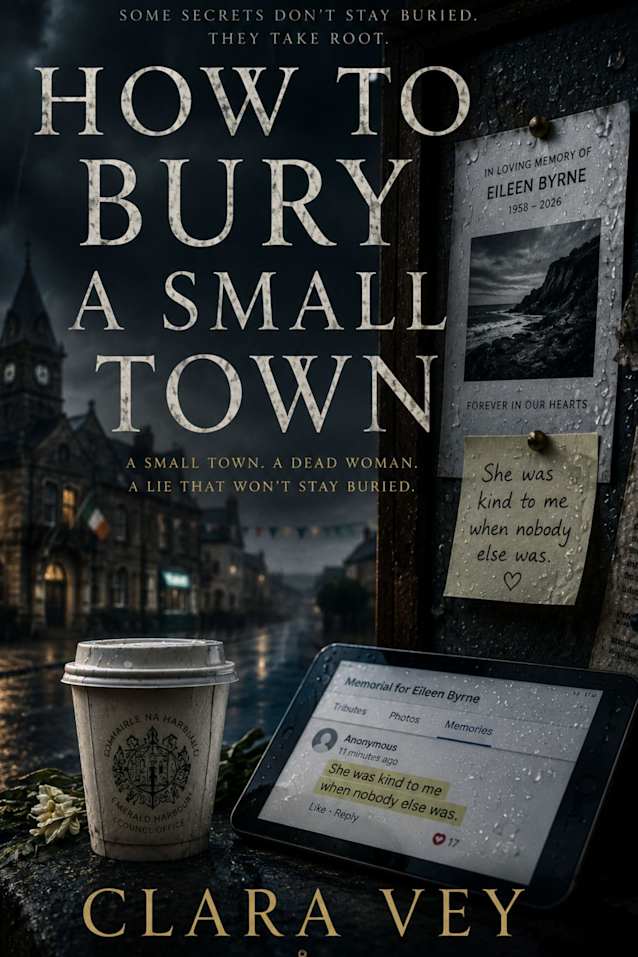
How to Bury a Small Town
About
In the small Irish town of St. Brigid’s, grief has rules.
When a single anonymous condolence appears on a public memorial page for Eileen Byrne and is immediately deleted, Ciara O’Connell — the woman responsible for the town’s records — makes an impulsive decision that will expose years of quiet erasure. The comment is simple and devastating: “She was kind to me when nobody else was.” Posted under the initials M.K., it points to Maeve Kinsella and a history the community has spent decades polishing into something respectable.
As Ciara restores the words and begins asking questions alongside the precise, guarded Malachy Byrne, she uncovers a pattern: moderated memorial pages, vanished committee minutes, a community transfer fund whose money moved with remarkable discretion, and families left to grieve only in approved language. From parish halls to credit union archives, from deleted Facebook comments to handwritten notebooks hidden in biscuit tins, the town’s careful surface begins to crack.
But some people will do anything to keep the past tidy. And in St. Brigid’s, the cost of asking questions has always been paid by those least able to afford it.
How to Bury a Small Town is a powerful, atmospheric novel of psychological depth and quiet rebellion. It explores what happens when ordinary women refuse to let inconvenient truths be buried under politeness, procedure, and public sympathy — and what it costs to make memory answerable.
For readers who love character-driven domestic suspense, Irish fiction with emotional weight, and stories about grief, community power, and the courage it takes to keep records when everyone else prefers to forget